
International Kitchen: Laos

AI-generated image of student struggling
March 4, 2021
Replace your usual meals with sticky rice, papaya salad, and pho soup. Although these foods probably are not familiar to you, they are constantly in my life. Thanks to my father, I have developed a strong liking for traditional Laotian cuisine.
In 1986, my father came as a refugee to the United States with his father, mother, and 6 other siblings from Laos. They moved to San Francisco, and crammed into a small home with some of their relatives who had already immigrated to the U.S. a few years prior to their arrival.
My father’s family was poor, so they could not afford to live in their own home. My grandparents were uneducated, so they picked up small paying jobs to support their large family. My grandfather worked at Medtronic, a medical device company. He built medical objects by piecing parts together. On top of that, he was also a janitor for a local church. They lived in a low income area, where crime was common. My family had close to nothing when they came to the United States, but they brought Laotian culture with them. My father and his family still carry on Lao culture, influencing me and my life.
Growing up, I have been lucky to experience two cultures in one home. My mother, who is American, was born in Reutlingen, Germany. At the time my grandfather, who has a PhD in Mediterranean Studies/Egyptology, was helping translate ancient Coptic into English. For most of my mother’s childhood, she grew up in the Norwin area. After graduating high school, she went to college and obtained an elementary teaching degree with a minor in Spanish teaching. She then moved to southern California to work. It was there where she met my father. He was attending Long Beach State University. They met each other through the church they both attended, and eventually got married after my father served a two year mission in Bangkok, Thailand. They continued to live in southern California, and had me and my sister. My mother was an elementary school teacher and my father was an accountant. Rancho Santa Margarita, which is where my family and I lived, was mixed with so much diversity. In the school district that my mother worked at, there was a high Hispanic population, to the extent that my mother had to fluently speak Spanish with her students every day. After living in California for a few more years, my father wanted to move to where my mother grew up. He wanted my sister and I to get to know our other grandparents.
Although it seemed like we were leaving everything behind when we moved, my father carried his Laotian culture to North Huntingdon. The constant influence of Laotian culture from my father helps me understand and enjoy learning about the world.
There are many aspects of Lao culture in my home, but one reigns far more superior than others. That is traditional Lao cuisine. A few
times a week when he has the time, my father makes Laotian-style food. Like many other cultures around the world, rice is incorporated into every meal. Usually, he makes sticky rice or fried rice. I prefer sticky rice because it is easy to make and it has an interesting texture. What separates this type of rice from others is it’s “sticky texture.” Sticky rice clumps together in a ball, so it can be dipped into many different sauces. In addition, it is naturally very bland. One of my favorite sauces is called jeow mak len. Jeow mak len is a combination of smashed tomatoes and spicy peppers. The raging taste of this sauce mixes well with the bland flavor of sticky rice.
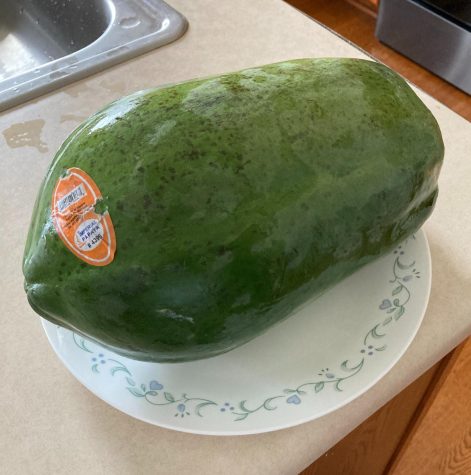
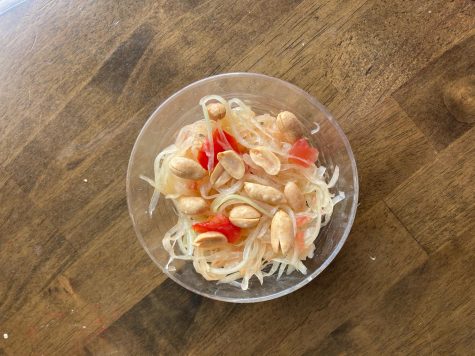
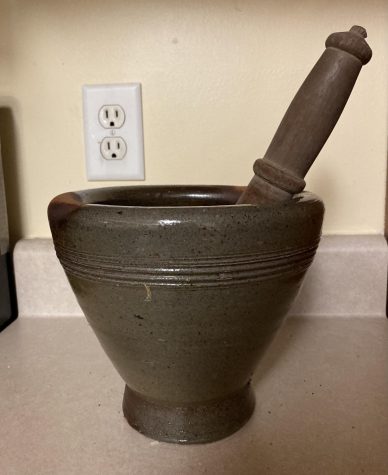
Lao food varies from soups to French style bread. Due to France’s colonization of Laos during the 1890s and all the way through the 1940s, a lot of Lao food is a mix of French and Southeast Asian cuisine. Papaya salad is a staple in Lao cuisine. It consists of raw shredded papaya, vegetables, and a variety of spices and salts. There are many variations of this dish, but my father and I like a particular kind. The best papaya salad tastes sweet and zesty. In order to obtain that flavor we combine shredded papaya, fish sauce, MSG, palm sugar, lime, tomatoes, and many other minor ingredients. If you want to add a crunchy texture to the salad, just add peanuts. All of these ingredients are combined together and squashed in a large, ceramic mortar and pestle.
Although some Lao dishes consist of a lot of unpopular or unfamiliar ingredients, patongo bread does not. Patongo bread is made up of flour, milk, eggs, and sugar. This bread is rolled into a long and skinny shape, giving off a Mexican churro-like appearance. It is then fried in oil on a skillet. What is unique about patongo bread is it’s taste. Some people think it naturally tastes very sweet, so they like to eat it plain. On the other hand, some like to dip it into sweet sauces. For example, my father enjoys dipping his bread into nutella.
Some traditional Lao food consists of rare ingredients that are hard to find at your local grocery store. To get certain vegetables and other products, my family shops at an Indian store in Monroeville and other small shops in the Strip District. Although there is no store that sells strictly Lao food in the Pittsburgh area, many products can be found at various Asian markets.
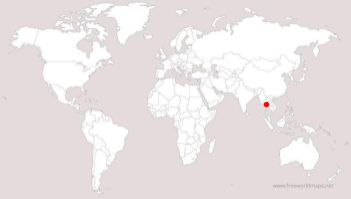
Something that I appreciate about Lao culture is how it takes different cultures from around the world and turns it into one. Due to its location, Laos is influenced by numerous countries. Proof of that influence can be shown through the appearance of the Lao people. The Lao people come from all regions of Asia. Their DNA is mixed with Indian, Chinese, and Thai ancestry. However, it should also be noted that there is still a high population of Mong people who live in the rural mountains of Laos. Whether at some time in history they moved down from the mountainous region is unclear. There is still no exact pinpoint on the origin of the Laotian people, but I am proud to be part of a country that embodies numerous cultures.
I am proud to be an American, but I am glad to have the knowledge of another culture that exists in the world. I feel more open to trying new things, and I believe that others should too. Learning about other cultures than your own will open your eyes. It will help you understand people better. You will gain different perspectives of things and learn why people are the way they are.