


Mewgenics is another of the many big indie hits this year, this one created by the beloved indie developer Edmund McMillen. This is far from Edmund’s first hit; he created The Binding of Issac and Super Meat Boy, both of which were among the first games to put indie gaming into the public consciousness.
Just like the rest of Edmund’s work, Mewgenics does not disappoint. From an outside perspective, the game can look very plain and a bit boring, but playing it really opened my eyes. Despite how it can look from a distance, it is one of the most engaging experiences you can get in modern gaming, especially in the turn-based RPG genre (uniquely from other games in this genre, it’s also a rogue-like)
I want to touch on the music first, because it is ridiculous how good this game’s soundtrack is. For the most part, it’s Jazz, but the styles and sub-genres are numerous, not that you’d get bored in the first place due to the sheer quality of the songs. This kind of soundtrack quality isn’t easy to come by; I’d say the only games that could stand to say the same would-be Elden Ring and the Persona series.
The art direction is also strong, but that is to be expected from Edmund. His art style has always been unique to the point that the actual quality doesn’t really matter, though it’s very high quality, just simply because of how his art style is. Mewgenics is a little less intricate and excessive compared to other projects of Edmund’s, but that only serves as a benefit. Edmund was seemingly trying to recreate the new grounds era art style to a father degree than usual, this level is usually only seen with Behemoth games (game studio.)
Finally getting to the gameplay, there are a lot of intricacies that I truly don’t have the time to write all of them down, so know that playing the game is the best way to get the whole picture on this section. That being said, I will do my best to communicate what you need to know. As it is a turn-based game, you can infer the turns, though it does have a few unique aspects that set it apart in the system department. Starting with the turn system, while far from a new concept, the turn system does not go one team to the next- while I’m unsure of exactly how its decided, turn order function on an individual level, each enemy and ally having its own spot on the turn order that allows for enemy attacks to be woven in between allies and visa versa.
Then there is the actual combat itself. I have so far neglected to mention the game being on a grid. On this grid, it’s required to move around your allies to utilize your abilities due to range. That in itself isn’t too weird, but this is the first game like this that I’ve played where I can use a basic attack, move, and use spells in the same turn. This prevents any of your cat’s abilities and stats from feeling or being useless, as you can always find at least some situation to use them without losing out on the opportunity cost of other actions. Ah, and then there’s the cats themselves. I will get into how you get the cats you use in battle in the next section, but for now, I’ll stick to the in-run gameplay. At the end of every battle, one of your cats will level up, allowing you to pick from a selection of randomly chosen abilities or passives. This is 50% of how you make “builds.” Making a cat that’s specialized to have unique and effective purposes is maybe the single most important aspect of the game. Even a terrible player can do well with the right builds.
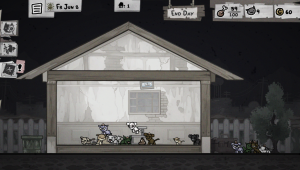 Now for the out-of-run gameplay. This is where Mewgenics really makes a name for itself, being the first (at the very least) popular rogue-like where progress is not truly lost. You still have to restart the gameplay at the beginning of each run, but assuming you end the run early willingly, you get to keep the cats, keep the items you found, and unlock permanent upgrades. Usually, rough-likes have the last one, but only the last one. After a run (assuming you end the run willingly), the cats you used become retired. This means you can’t use them again, but you can still breed them to make a next generation of cats that have new builds taking parts of their parents’ builds and occasionally mutating random abilities in there. At the start of every day, a stray will appear at your door. This is a contingency for if you somehow manage to kill ALL of your cats, but it also serves to introduce new abilities and passives into your breading pull at a faster rate than mutations. Let’s say you’ve bred the cats you need, and you don’t want all those retired cats syphoning your food supply. Introducing the pipe, you can put cats into the pipe and exchange them for permanent upgrades, like more house space and new classes for your cats. Each NPC has their own wants in the cats you give them, so you also won’t have to care too much about making hard decisions on that front. This is a perfect system that gives the player complete control of both the upgrades they get and the things they lose in exchange. A run ends doesn’t feel like a chore, it feels like its own fun game attached to the other very fun game- and they both complement each other perfectly.
Overall, Mewgenics is an amazing game worth every cent. I can’t quite give it perfect marks due to a few little oversights that are common in Edmund’s work, but they aren’t too bad, so my final rating is a 9/10. Even if you aren’t a fan of turn-based RPGs, you should still at least try this game if you’re presented with the opportunity.