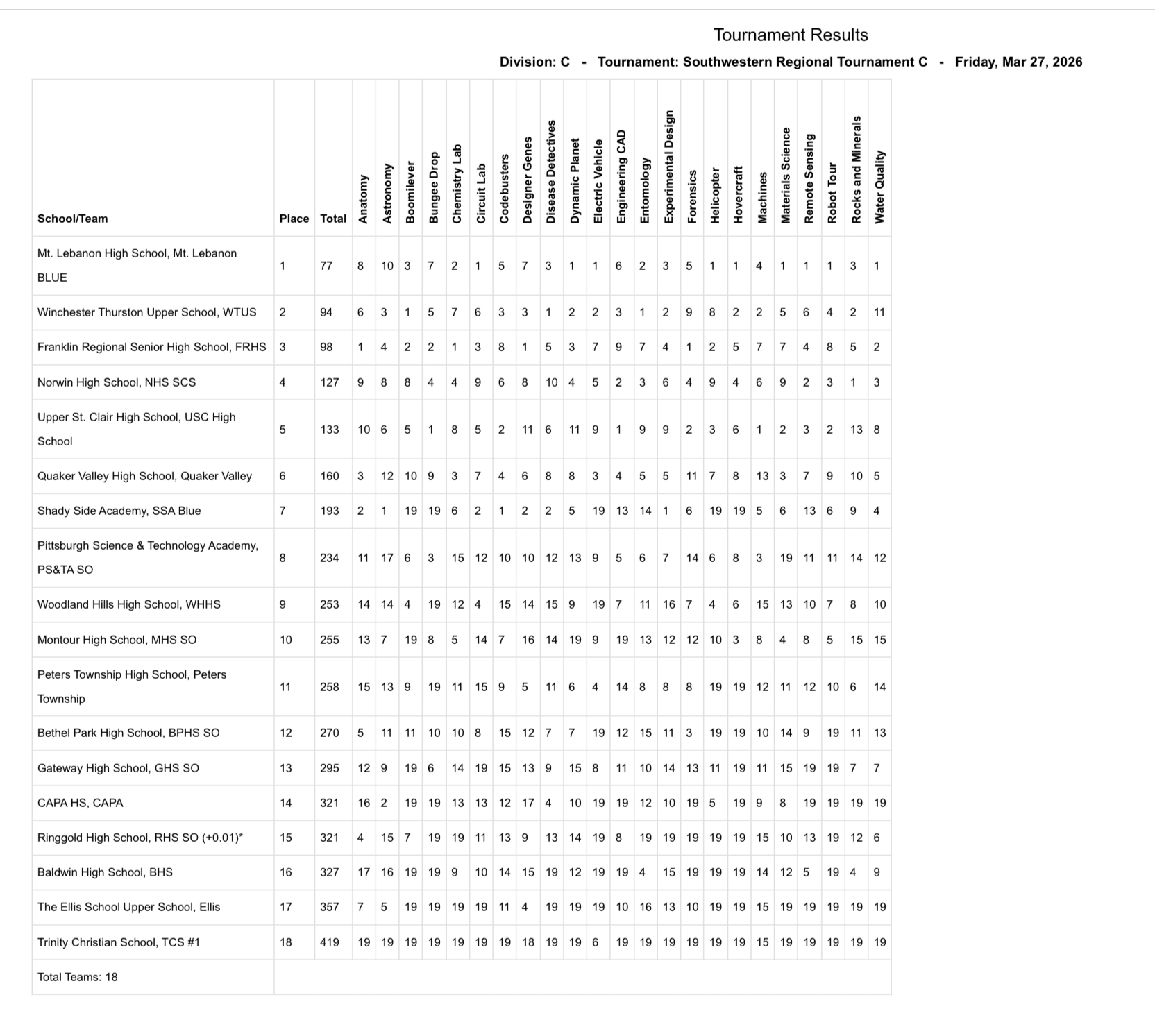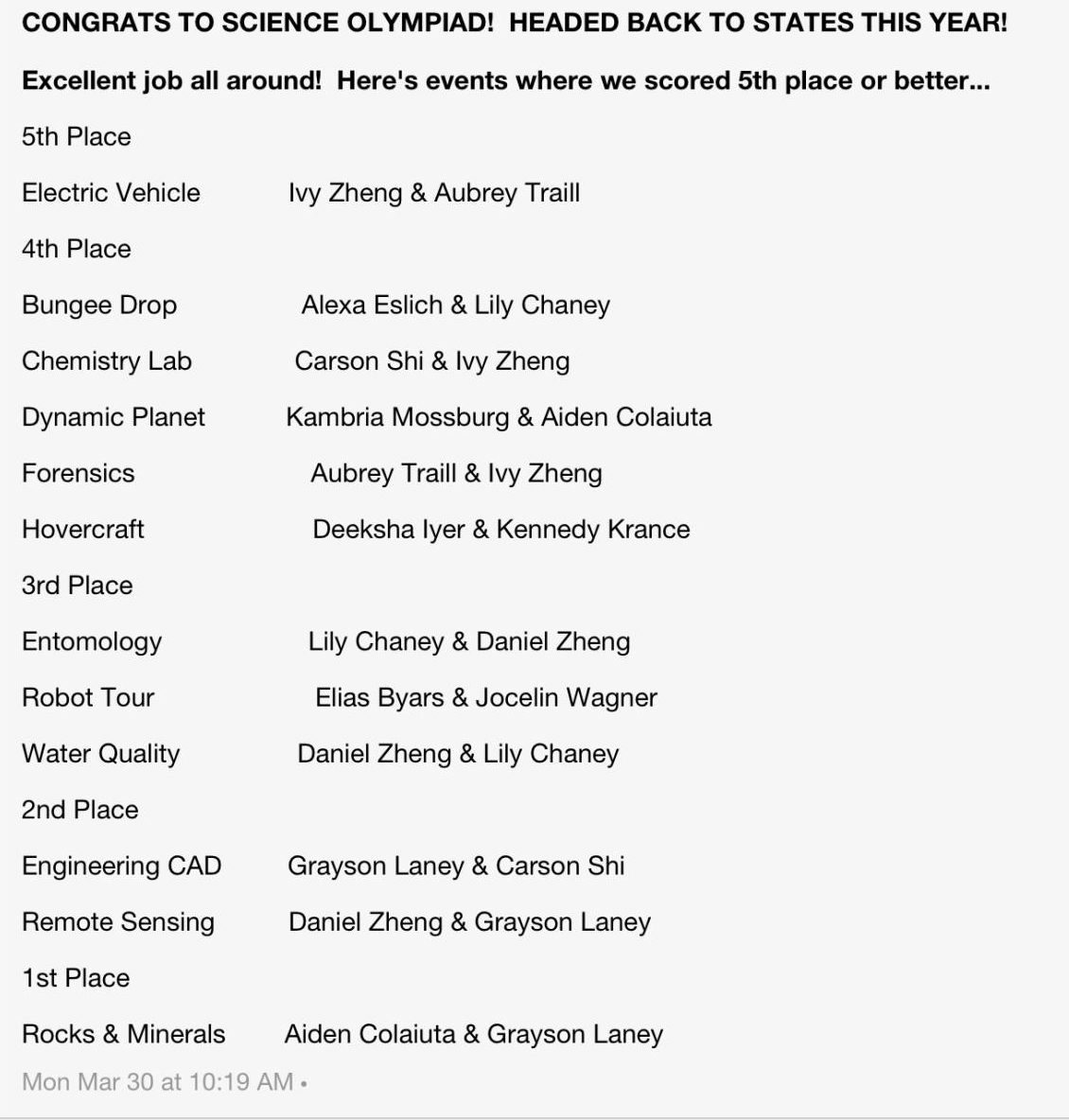
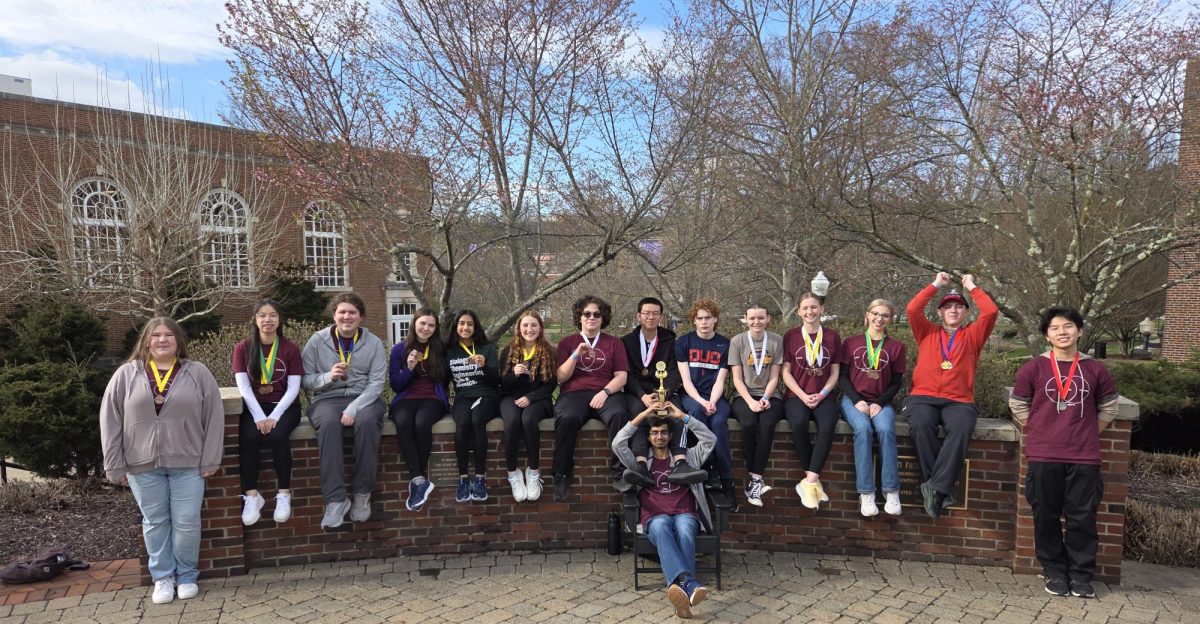
Norwin Science Olympiad participated in many competitions that season, including the 2026 Dick Smith Memorial, Carnegie Mellon, Penn-West, and some virtual competitions. Norwin earned enough points to make it to Regionals, and they placed 4th at Penn-West on March 27. At Regionals, the team qualified to go to the State Championship, and they will go on April 25 at Penn State Altoona.
“This year, I noticed both the middle school and high school team was a lot more prepared than in previous years. I have been doing Science Olympiad for 6 years now,” said senior President Lilian Chaney. “I remember quite a few years ago, people would be rushing to research and take notes for events while we were at the competition, minutes before their event. But, when we got to the competition, everyone was a lot less frantic since they were more prepared for their events.”
The Norwin Science Olympiad team has been working for months, trying to prepare to win a state title. Last year, they didn’t get to reach State, but their hard work and different approach let them reach their goal.
“I felt pretty confident [at regionals],” said junior Grayson Laney. “Of course, I focus more on some events than others, and I did pretty well in all of them. I even got 1st in the event Rocks and Minerals.”
Each team consists of a few people to compete, and it takes months to study for each event and section. The team’s win at Regionals really shows how much the team has to study; not everyone gets 1st place. Norwin only had one invidual 1st place, but their determination brought them to the State Championship this year.
“There are 15 students on the team and 23 events, with each student prepping for normally three events. There is a lot to keep track of for just one event, and when you have three events, it becomes even more challenging,” said Coach Matthew Anticole. “ While we didn’t finish top 5 in every event, we didn’t bomb any events either. Consistent performance in EVERY event is critical when sometimes there’s only a few points that separate teams who make it to States and teams that don’t.”
The team has to go through three types of exercises and experiments to pass through the rounds: the first is study-based, where they have months to prepare and take tests on a certain topic. If they pass the test, they can compete with other people to win that section. The second type of exercise is construction, where they perform and build experiments for a certain topic, and get certain results. The third is Hybrid, both study and construction.
“I’m proud of the fact that we were able to make the changes needed to get back to States this year, and proud of the students for making those changes,” said Anticole. “I tell students when they apply that the Science Olympiad is like adding a whole additional class to your schedule that you somehow have to fit in with everything else you’re doing as a normal teenager, so it isn’t for everyone! That said, students seem to enjoy the challenge (and eating dinner at Hoss’ on the way home from the State competition!).”