Sometimes it feels like our school focus has become much more fixated on science than humanities. In all honesty, it makes students who excel in humanities, like myself, feel under appreciated.
I have always been strong in the humanities part of learning. Math and science have never been my strong suits. If you asked me to write a 5 page essay on any subject, I could write it with no issue. But if you asked me to solve a simple calculus problem, I would be stuck staring at it as if it were a blank paper.
The constant cycle of going to school and sitting in the classroom for 7 hours can be challenging for students like myself. Students are tired, may fall asleep, or may simply get bored.
Although students learn a lot in school, it does not mean that school it is not draining. Sitting for 7 hours for 5 days of the week can feel like a trance.
AP Environmental Science, or more commonly known as APES, taught by Mrs. Muchoney, takes kids out of this trance. As a student in her class, I can vouch this.
To continue, I’ve taken countless AP and honors classes, but I never took a single advanced science class. It was not until my junior year, when I was sitting in Mr. Anticole’s Physics class, that I got convinced to take APES.
Mrs. Muchoney and her students presented to us. They talked about all the different topics from earthquakes to how to reduce your ecological footprint which was different from any other science.
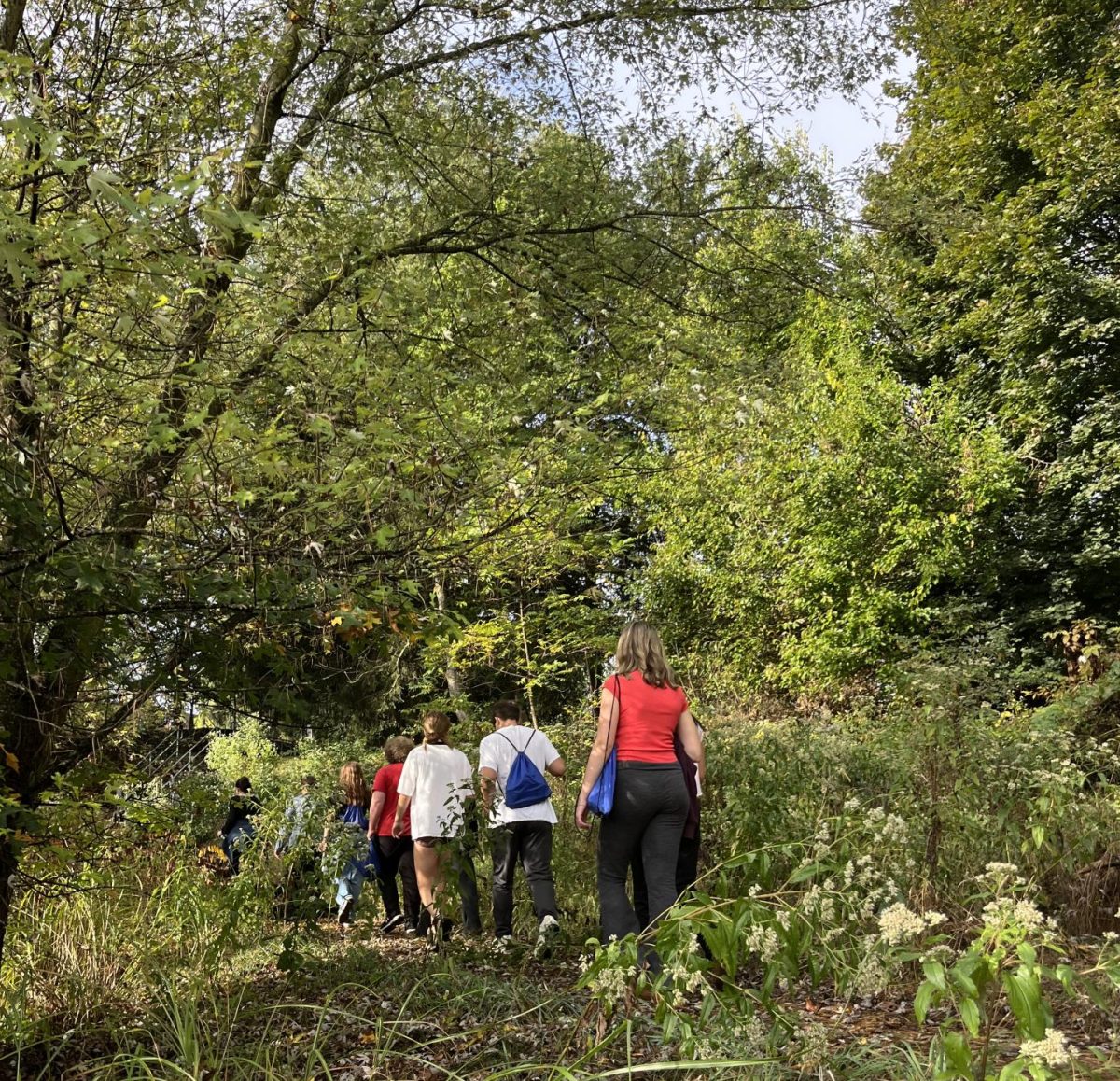
What really caught my eye was the fact that we got to go outside. I had never had a class where we got to do learning so hands on.
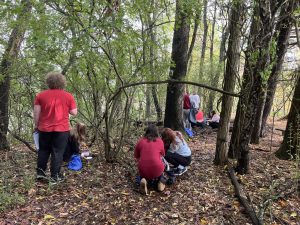
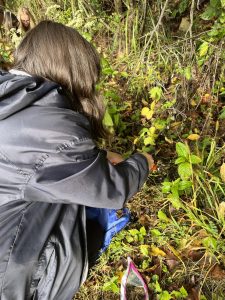
“CHS-AP Environmental Science is unique because it is an interdisciplinary science which covers a broad range of topics from ecosystems to nuclear accidents. Additionally, we conduct a lot of fieldwork activities that allow us to enjoy our lovely campus on a regular basis. We take field trips to Sewickley Creek Watershed Association Field Day, Robert Morris University (our CHS partner), and Tinker’s Run for water quality testing,” stated Mrs. Muchoney.
APES has taught me in ways I never thought I could learn. I did not know I could handle an AP science until I learned that science and humanities can work together.
“Environmental Science incorporates humanities, as environmental science is the study of human impacts on the Earth. Our population unit covers human demographics and how cultural, social, and educational norms impact populations and the environment. Environmental Science covers a broad range of science and engineering topics including biology, chemistry, physics, and real-world problem solving,” exclaimed Mrs. Muchoney.

It has recently felt like the importance of the environment keeps getting pushed away, so it is refreshing to learn about how impactful the environment is to the health of the world.
I now understand that science and humanities can work together. Even students who feel like science may not be their forte truly can experience something different in AP Environmental Science.
“Students should take CHS-AP Environmental Science because it has a lot of real-life applications, such as making wise energy decisions and sustainable landscaping. Environmental Science is a growing and employable field encompassing careers from sales to architecture. Additionally, students have a great opportunity to earn college credit through the AP program (100% pass rate for 2025) or through our partnership with Robert Morris University,” expressed Mrs. Muchoney.
As someone who plans to be a business major, AP Environmental Science will still impact me in my every day life. Whether it is how I am transporting places or determining what food I buy at the grocery store, I will have some sort of advice from Mrs. Muchoney’s class. I suggest that anyone who has the chance should take AP Environmental Science.